
November 7, 2025

Graduate Study Permits in Canada: Cap Exemption and 2‑Week PhD Processing

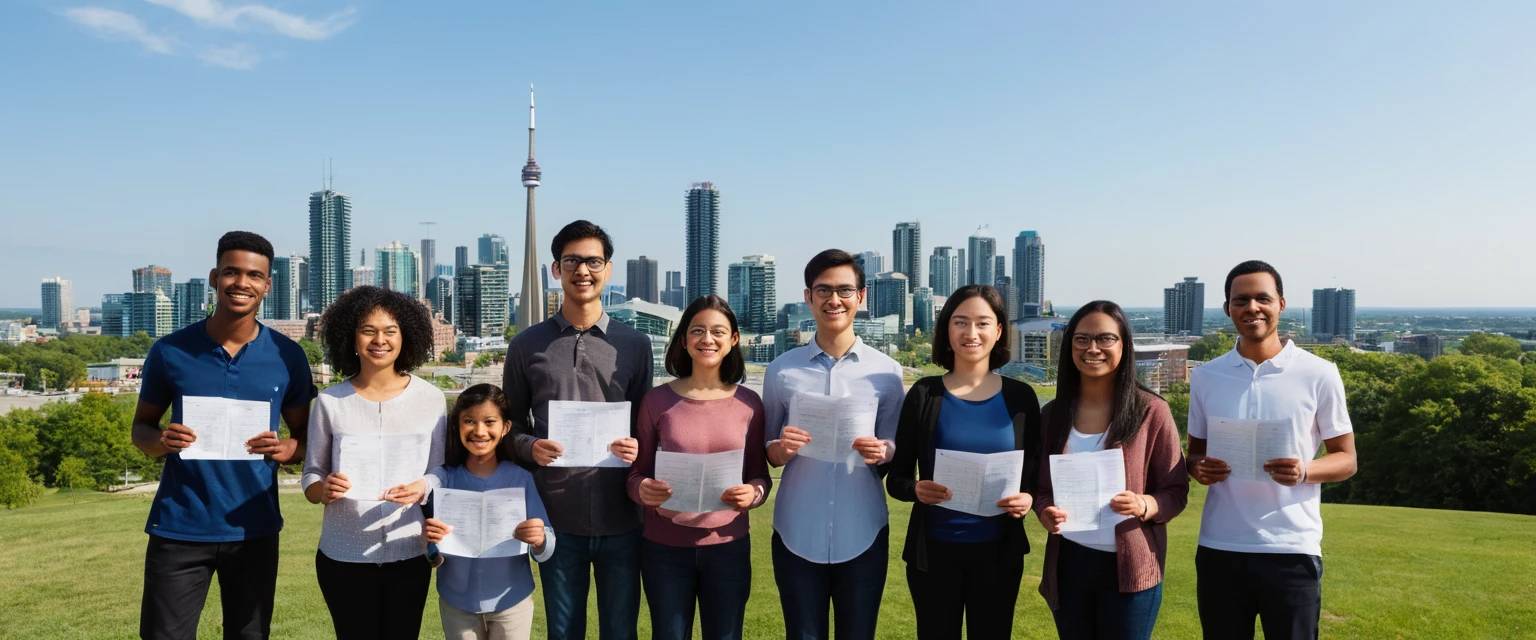
Canada has become an even more attractive destination for international graduate students, thanks to landmark study permit updates. Starting January 1, 2026, master’s and doctoral students at public Canadian institutions will be exempt from the federal study permit cap, while PhD students will benefit from ultra-fast two-week application processing. At Sayal Immigration, our team guides students and families in Toronto, Mississauga, Brampton, Kitchener, Scarborough, and London Ontario through every step of this new process.


What Changed for Master’s and PhD Students

Cap Exemption from January 1, 2026

Graduate students pursuing a master’s or PhD at a Canadian public institution can now apply for study permits without worrying about the country’s cap on permits or the need for a Provincial or Territorial Attestation Letter (PAL/TAL). This policy change means you won’t risk missing out due to quota limits and don’t need to pay a hefty upfront deposit just to secure your spot before applying for your permit. Learn more about IRCC’s study permit requirements.

Two‑Week Processing for PhD Applicants

Doctoral applicants applying from outside Canada now qualify for expedited two-week study permit processing. Your spouse or partner and dependent children can benefit from fast-tracked work or study visas if their applications are submitted together, making it much easier for families to begin life in Canada as a unit. Official IRCC page for PhD processing


Who Qualifies (and Who Still Needs a PAL/TAL)

You’re Exempt If:

  • You’re admitted to a master’s or PhD program at a public Canadian institution starting January 1, 2026 or later.

  • You apply with all required documents, including Letter of Acceptance, proof of funds, and passport.

Check if your school is a Designated Learning Institution (DLI).

You Likely Still Need a PAL/TAL If:

  • You’re studying at the undergraduate level, doing a postgraduate certificate/diploma, or attending a private institution.

  • You are switching programs or reapplying after a refusal (always confirm with your institution).

Full IRCC PAL/TAL guidance here.


Required Documents for Graduate Study Permit Applications

Always Needed

  • Letter of Acceptance (LOA) from a DLI

  • Valid passport and identity documents

  • Proof of funds to cover tuition and living expenses

  • Recent photos meeting IRCC specifications

See IRCC’s up-to-date application checklist.

Sometimes Needed

  • Upfront medical exam (if required for your program length or previous country of residence)

  • Police certificates

  • Country/visa office-specific documents

  • Proof of custody for accompanying minors

Panel physicians list for medicals (IRCC)


Applying with Sayal Immigration: Ontario’s Graduate Student Specialists

Whether you’re applying for a study permit in Toronto, Brampton, Mississauga, Kitchener, or Scarborough, Sayal Immigration makes your journey smooth and compliant.

Our Local RCIC Services Include:

  • Reviewing school choices and confirming your cap exemption

  • Document prep for Toronto (U of T, York), Mississauga (UTM/Sheridan), Brampton, Kitchener, and Scarborough universities/colleges

  • Helping families of PhD students file together for two-week processing

  • Coaching for personal statements and SOPs

  • Guidance on PGWP planning and PR eligibility for graduate students

Explore all our immigration consultant services in Canada.


Step-by-Step: Filing a Graduate Study Permit

  1. Confirm your exemption: Review your program and institution status—public master’s/PhD from January 2026 onwards is key.

  2. Gather core documents: LOA, proof of funds, passport/ID, compliant photos.

  3. Prepare supporting evidence: Letter of explanation, medical exam, police certificate if required.

  4. Apply for all family members together if pursuing a PhD: This enables expedited processing.

  5. Apply online via the IRCC portal and double-check your files for completeness.

  6. Track your application: Respond quickly to any additional document requests or biometrics instructions.

Create your IRCC account to apply


Looking Ahead: Graduate Studies, PGWP and PR

A key benefit for master’s and PhD students at public institutions is their continued eligibility for the Post-Graduation Work Permit (PGWP). Completing PGWP-eligible programs in cities like Toronto or Kitchener sets you up for Express Entry or Provincial Nominee Program (PNP) options—major pathways to Canadian permanent residence.

Express Entry overview (IRCC) PNP info (IRCC)


Frequently Asked Questions

Q1: Do all master’s/PhD students avoid the cap and PAL/TAL?

All master’s and doctoral students at public institutions (starting with cohorts entering Jan 2026+) are exempt. Always confirm your program type and institution’s public status before applying.

Q2: How do PhD applicants get two-week processing?

You must apply online from outside Canada and submit all documents (plus those of any eligible family) with your principal application.

Q3: Can private-college grad students skip the cap?

No—most private institution programs are still subject to the cap and PAL/TAL requirements unless IRCC specifies an exemption.

Q4: How does this affect PGWP eligibility?

Public-university master’s and doctorates remain strong PGWP choices. Private programs require careful review for compliance.

Q5: Can Sayal Immigration help families bundle applications?

Absolutely; our consultants ensure your spouse/partner and dependents are included if you qualify, maximizing approval speed and success.

August 13, 2025
 

Dream Big: Canada’s Game-Changing Express Entry Overhaul in 2026

Picture this — you’re sipping your morning coffee, scrolling through the news, and there it is: Canada’s opening up a whole new set of doors for skilled professionals in 2026. Not just minor tweaks to the rules, but bold, clear pathways for certain occupations to get fast-tracked into permanent residency. If you’re a senior manager, a scientist, or even a highly trained military professional, you might be looking at your golden ticket. And as an Immigration Consultant in Canada, we can tell you… changes like these don’t come often, and when they do, they can completely shift the game.

What’s New in 2026?

The Immigration, Refugees and Citizenship Canada (IRCC) is running a public consultation — open until September 3, 2025 — to shape three brand-new occupational categories for Express Entry:
  1. Leadership – Senior managers and executives.
  2. Research & Innovation – Scientists and researchers.
  3. National Security & Defence – Military professionals.
They’re not picking these at random. Canada wants people who can lead, innovate, and protect — people who can make a difference from day one.

Why These Categories?

  • Leadership (Senior Managers): The big-picture thinkers. The people who can guide a company through growth or even transformation. As an Immigration Consultant in Mississauga, we’ve seen executives from abroad completely turn around struggling Canadian companies. One client, an operations head from Singapore, came in on a work permit and within 18 months was leading a 200-person team in Ontario.
  • Research & Innovation: Canada’s making it clear — innovation is the currency of the future. Scientists and researchers will get a front-row seat in the immigration process, helping push breakthroughs in areas like clean energy, health sciences, and AI. We worked with a PhD bioengineer who thought she’d need years to qualify; with the right pathway, she received her PR in under a year.
  • National Security & Defence: Skilled military personnel — especially from allied countries — could soon be in demand. It’s not just about defence; it’s about strategic skills, leadership under pressure, and the ability to manage complex operations.

How This Could Benefit You

Let’s talk about the real perks:
  • Lower CRS scores for targeted draws. In some category-specific rounds, we’ve seen cut-offs well below general draws. This means someone who might just miss the general pool could make the cut here.
  • Priority selection. As an Immigration Consultant in Toronto, we’ve had clients with borderline scores who got through thanks to category-based draws.
  • Standing out in a crowd. By August 2025, there were more than 24,000 candidates in the 501–600 CRS range. These new categories give you a chance to move out of the general competition and into a priority lane.

What’s Not Changing

Canada still values other high-demand skill sets:

How to Prepare Now

Here’s the thing — when the doors open in 2026, there’s going to be a rush. You don’t want to be the one still filling out forms while others are already getting Invitations to Apply.
  • Stay in the loop until the consultation ends on September 3, 2025.
  • Fine-tune your profile so your experience is crystal clear — especially if it’s in management, research, or the military.
  • Work on your language test scores and education credentials.
  • Consider Provincial Nominee Programs — some provinces move quickly to adapt to category changes.
From our experience as an Immigration consultant in Kitchener, preparing supporting documents early — job references, proof of duties, academic records — can shave weeks or months off your process.

Why Being Ready Matters

This isn’t the time to “wait and see.” Once the categories launch, those who are ready will have the upper hand. If you need an Educational Credential Assessment (ECA) or want to upgrade your language test results, do it now. From what we’ve seen as an Immigration consultant in London Ontario, last-minute scrambles often mean missing the window.

Special Note for Military Professionals

This one’s big. If you’ve served in a military capacity and are looking to build a civilian life in Canada, you could be in a priority lane. Beyond defence, your skills in leadership, logistics, and operations are exactly what Canada values. In fact, even in areas like Scarborough, we’ve helped veterans transition into secure, well-paying roles. That’s where working with an Immigration Consultant in Scarborough can really pay off — making sure your unique skills are highlighted in the right way.

Quick Facts – 2026 Express Entry Changes

Launch:
  • Proposed for 2026, public consultation open until Sept 3, 2025.
New Categories:
  1. Leadership (Senior Managers)
  2. Research & Innovation (Scientists, Researchers)
  3. National Security & Defence (Military Personnel)
Benefits:
  • Lower CRS score requirements in targeted draws.
  • Priority selection for high-demand skills.
  • Clearer, faster PR pathways.
What to Do Now:

Final Thoughts: Don’t Just Watch — Act

The 2026 Express Entry changes aren’t just policy updates; they’re an opportunity. For leaders, innovators, and protectors, this could be the smoothest, fastest route to Canadian PR you’ll see in years. At Sayal Immigration, we help professionals plan for these moments so they can move quickly when the time comes. The key? Start now. The people who prepare early are the ones telling success stories later.